Luxury Game Room Ideas: Design, Features & Tips
How to Create a Luxury Game Room in Your Home
A luxury game room is a dedicated home entertainment space that brings together your favorite games, comfortable seating, thoughtful lighting, and quality finishes. It might be a quiet billiards room, a lively retro arcade, a poker lounge, or a shared space for movies, sports, and family game nights. The best design starts with how you want to spend your time.
Creating that retreat takes more than choosing impressive equipment. Games need room to play, seating should encourage people to settle in, and the technology should be easy for everyone to use. When those details work together, the room becomes a natural gathering place that feels personal, inviting, and connected to the rest of your home.
6 Tips for Planning a Luxury Game Room
Plan your game room around six decisions: its purpose, equipment, décor, seating, smart technology, and finishing touches. Each affects the others. A large pool table influences the furniture arrangement, for example, while a room designed for movie nights needs different lighting from a space used mainly for cards or board games.
If you want to transform some of your existing space, start with a wish list and a simple room sketch. Note the doors, windows, outlets, and features you intend to keep, then identify which activities deserve the most space. This gives you a practical starting point before you commit to furniture or built-in installations.
- Define who will use the room and which games you enjoy most.
- Choose the main entertainment features before adding secondary equipment.
- Coordinate lighting, colors, wall finishes, and flooring.
- Plan comfortable seating and clear routes through the room.
- Integrate lighting, media, and climate controls where they improve everyday use.
- Add personal details and storage that make the space feel complete.
Use these priorities to guide the decisions below, whether you are updating a spare room or planning an entire basement entertainment area. A clear plan lets you put more attention into the features you will use regularly and helps prevent a beautiful room from becoming crowded or difficult to enjoy.
1. Define Your Game Room’s Purpose and Style
The first step is to decide what the room should do for you. A dedicated billiards room can center on one beautifully finished table, while a family game room may need flexible seating, easy-to-reach storage, and several ways to play. If you love hosting, consider how guests will move between the games, refreshments, and conversation areas.
Think about the atmosphere as well as the activities. A casino-inspired lounge might suit evening card games, while a bright, relaxed room could work better for family afternoons. You can combine interests, but choosing a primary use makes it easier to select furniture and décor that belong together.
- Classic billiards room: Make a pool table the focal point, with cue storage and a nearby place for players to sit between turns.
- Modern gaming lounge: Build around console or PC gaming, comfortable chairs, screen placement, and organized cables.
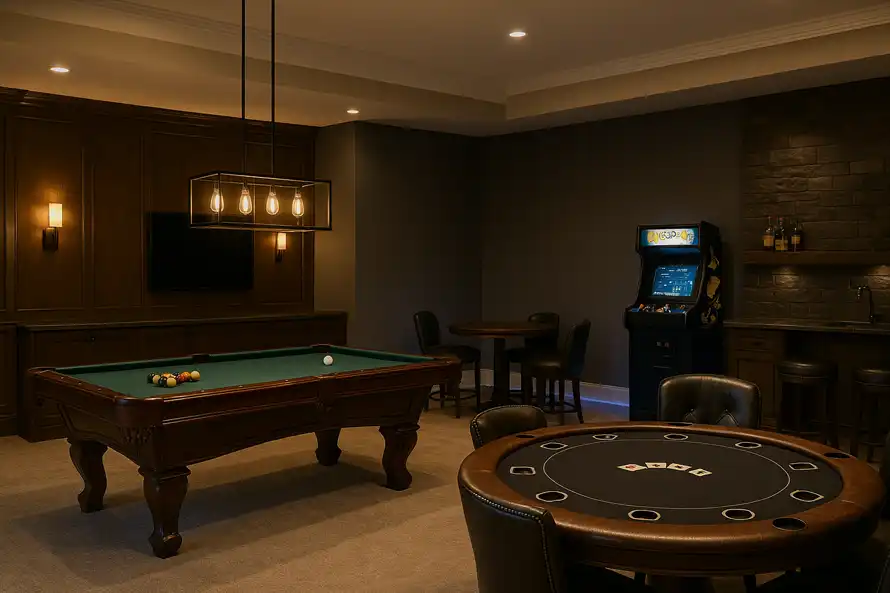
- Casino-inspired interior: Pair a poker table with lounge seating, rich finishes, and a convenient drinks station.
- Retro arcade room: Showcase vintage arcade cabinets, nostalgic artwork, and a playful color palette.
- Family fun zone: Include board games, flexible tables, accessible storage, and seating for different ages.
- Sports lounge: Arrange seating around the main screen and leave room for snacks, conversation, and games during breaks.
- Media room with built-in systems: Combine movies and gaming with integrated speakers, equipment storage, and adjustable lighting.
For a multipurpose room, give each activity a defined area. A basement might have billiards at one end, a media lounge at the other, and a card table between them. In a smaller room, a single theme with flexible furniture often works better than trying to accommodate every interest at once.
2. Choose the Right Games and Entertainment Features
The most useful luxury game room features are the ones that fit both your interests and your available space. Start with one main attraction, such as a pool table, shuffleboard table, or gaming setup. Add other features only after you know there is enough room to use the first comfortably.
Measure the playing area as well as the equipment itself. A pool table needs space for cue movement; a golf simulator needs room for the player, swing, screen, and equipment; and theater chairs need room when reclined. Check the requirements of the specific products you are considering before finalizing the layout.
Classic Game Staples
- Pool or billiards table: Choose quality finishes such as a rich wood frame and leather pockets, with a design that complements the room.
- Foosball or air hockey table: Add a fast-paced option for family gatherings and friendly competition.
- Shuffleboard table: Create an additional activity along a suitable wall, leaving the playing ends accessible.
Casino-Inspired Features
- Poker table: Custom felt, comfortable seating, and integrated drink holders can make regular card nights more inviting.
- Slot machines or a roulette table: Use these as recreational or decorative focal points in a casino-themed room.
- Built-in bar or cocktail station: Keep glassware, refreshments, and serving supplies close to the entertaining area.
Entertainment Showstoppers
- Home bowling alley: Make bowling the centerpiece of a large recreation space, with lighting that highlights the lanes.
- Indoor golf simulator: Plan the enclosure and hitting area around the chosen system and the people who will use it.
- Dartboard: Choose an electronic model or a traditional board with a dedicated throwing area outside busy walkways.
- Private theater screen or projector: Create a shared destination for movies, console gaming, and watching sports.
Arcade and Technology Features
- Vintage arcade machines or racing simulators: Add distinctive games that match your interests and the room’s theme.
- VR station or gaming consoles: Provide clear play space and convenient storage for controllers, headsets, and accessories.
- Surround sound and acoustic wall panels: Pair immersive audio with room treatments that help manage reflections and echo.
Very large recreation areas may also accommodate a basketball court or climbing wall, but these installations need their own planning and space. At the other end of the scale, a board game lounge with comfortable chairs, a statement coffee table, a beverage fridge, and wall-mounted shelves can feel just as considered. Choose a few features you love and give each enough room to work well.
3. Bring the Room Together with High-End Décor
A cohesive design makes a game room feel like part of the home. Start with a palette and a few materials you want to repeat, then use them across furniture, lighting, and storage. You might combine warm wood and leather for a traditional lounge or choose darker finishes and restrained LED lighting for a contemporary gaming room.
You can also refresh your space without replacing everything. A new seating arrangement, layered lighting, coordinated artwork, and a well-chosen rug can help connect existing pieces. Pay attention to what players see from their seats: glare on a screen or a harsh light directly over a card table can undermine an otherwise attractive design.
- Lighting: Combine ambient light for the room, task lighting over playing surfaces, and accent lighting for shelves or architectural details. Chandeliers, dimmable fixtures, LED strips, and backlit features can each serve a different purpose.
- Color palette: Deep navy, emerald, charcoal, and burgundy can create a rich atmosphere. Balance darker colors with lighter surfaces or warm lighting so the space still feels welcoming.
- Wall art and finishes: Use framed game posters, metallic wallpaper, wainscoting, or a custom mural to establish character. Give favorite pieces enough space to stand out.
- Flooring: Choose hardwood or luxury vinyl for the look and everyday use you want, then add rugs where softness and comfort matter. Keep rug edges and furniture placement clear of active playing areas.
Repeat a few details instead of filling every surface with decoration. A wood finish carried from the pool table to a cabinet, or a color repeated in upholstery and artwork, can make the room feel carefully assembled. If you need help bringing several styles together, an interior designer can help refine the choices around the features you want to keep.
4. Plan Comfortable Seating and an Easy-to-Use Layout
Comfort determines whether people stay after the first game. Choose seating for the activities you expect to enjoy, from supportive chairs for gaming to a generous sectional for watching movies. The room should also offer a place for guests who want to watch, chat, or take a break.
Arrange the largest equipment first, then add seating around its usable footprint. Consider how the room works when chairs are pulled out, recliners are open, or several people are playing at once. A layout that looks spacious when empty can feel very different during a busy game night.
- Lounge seating: Leather recliners, plush sectionals, and velvet accent chairs can create comfortable places to relax between games.
- Theater seating: Reclining seats with cupholders and USB ports may suit long movie nights, provided their fully extended position fits the room.
- Bar seating: Cushioned stools at a counter or built-in bar offer a casual spot for refreshments without taking over the main lounge area.
- Gaming chairs: Look for adjustability and lumbar support, with a size and style that work with your desk and décor.
- Clear circulation: Keep routes between the entrance, seating, refreshments, and games free of furniture and loose cables.
- Convenient surfaces and storage: Place side tables, game storage, and controller drawers where people can reach them without interrupting play.
Before buying the main pieces, mark their approximate positions on the floor and walk through the arrangement. Check screen views from each seat and make sure spectators will not block players. This simple step can reveal whether a smaller sofa, fewer stools, or a different table position would make the room more comfortable.
5. Use Smart Home Technology to Simplify Entertainment
Smart home features can make a game room easier to use by bringing lighting, media, and temperature controls within reach. The aim is a room that responds to the activity: brighter light for board games, softer light for a movie, and a comfortable setting when friends arrive.
Choose controls that your household and guests can understand. Plan where equipment, charging points, and cables will go before adding finished cabinetry, and check that the devices you select work together. A tidy installation and a straightforward set of controls often contribute more to the experience than a long list of features.
- Smart lighting: Use dimmable fixtures or adjustable LED strips to change the mood. Lighting behind a television or bar can add atmosphere without becoming the room’s main visual distraction.
- Activity presets: Set up a few clearly named options, such as “Game Night” or “Movie,” to adjust compatible lights and media settings together.
- Climate control: A smart thermostat can make temperature adjustments more convenient in a room used for different lengths of time.
- Motorized window shades: Adjust daylight and screen glare without rearranging seating or stopping a game.
- Central controls: A wall-mounted tablet or compatible voice assistant can bring supported lighting, music, media, and temperature settings into one place.
- Organized equipment: Keep consoles, receivers, and accessories accessible, with suitable ventilation and a clear place to charge devices.
The finished setup should make the room easier to enjoy from the moment someone walks in. Keep everyday controls accessible and use presets only where they save effort. Smart technology works best when it supports the gathering and lets people focus on playing, watching, or spending time together.
6. Add Personal Details and Finishing Touches
The finishing touches give a luxury game room its personality. A hidden entrance, a collection of favorite memorabilia, or a carefully arranged drinks cabinet can make the space feel distinctly yours. Choose details that connect to how you entertain and what you enjoy collecting or displaying.
This is also the time to think about sound and organization. A lively room needs places to put games, glasses, and accessories, along with an approach to audio that suits the rest of the house. Decorative acoustic panels can help with echo inside the room; limiting sound transmission to neighboring rooms may require additional work on the room’s construction.
- Hidden speakeasy entrance: A bookshelf-style doorway can introduce a sense of discovery and suit a private lounge theme.
- Acoustic treatments: Use suitable panels or tiles to help manage reflected sound, especially around a media or gaming area.
- Specialty storage: A built-in wine fridge, cigar humidor, or premium liquor cabinet can support your preferred entertaining setup.
- Personal displays: Dedicate a wall or shelving area to trophies, collectors’ items, sports memorabilia, or themed décor.
- Practical organization: Store board games, cues, controllers, and serving supplies near the areas where they are used.
Choose a few details with personal meaning and give them room to stand out. The result should feel comfortable on an ordinary evening as well as impressive when guests arrive. A room that is easy to tidy, easy to use, and filled with things you enjoy is more likely to become a lasting part of daily life.
Ready to Bring Your Dream Game Room to Life?
A luxury game room starts with a clear picture of how you want to live and entertain. You may already have a basement, bonus room, or spare room that could accommodate your plans. If your current layout cannot support the features you want, it may be time to explore new real estate options with more suitable entertainment space.
First Star Realty’s expert real estate professionals can help you look for a home with room for your preferred setup or a lot for a future build. Bring your game room priorities into that search early so you can evaluate the usable layout, location of the entertainment area, and potential for future changes alongside the rest of your home wish list.
- Identify the games and entertainment features you consider essential.
- Describe the seating, storage, and gathering space your household needs.
- Decide whether you prefer an existing entertainment room or space you can adapt.
- Share your priorities with your real estate agent when comparing homes or lots.
Contact First Star Realty to discuss a home or property that gives your vision room to grow. Whether you picture relaxed family game nights, a dedicated billiards lounge, or a larger entertainment retreat, the right space provides the foundation. Start with the activities you love, plan for comfort, and build a room you will want to use for years to come.